
Musicians & live music
Musicians and music lovers live in louder worlds. These answers cover safer rehearsals, live shows, stage setups, and what ringing ears are really telling you.
- Earplugs that still sound right
- Ringing ears and recovery
- Rock vs. classical, and the “joy factor”
- Stage setups and room acoustics
Earplugs that still sound right
4 QUESTIONSWhy do earplugs sound hollow, and is there something better?Asked: “I have tried earplugs, however they sound hollow. Additionally, I cannot really hear the high-end. Are there better earplugs?”
That hollow sound is normal foam-plug physics: they cut highs more than lows. High-fidelity (“flat”) musician plugs put the highs back, so music sounds the same, just quieter.
Due to the law of physics, earplugs lessen (attenuate) the sound energy for the higher pitches more than the lower bass notes. Typically earplugs will cause music to sound hollow without much high-end. In the late 1980s, a company named Etymotic Research came out with a “flat” earplug—one that lessens the sound energy for the high-pitched notes as much as for the low bass notes. These use a small acoustic amplifier that puts back many of the high-pitched sounds. Musicians and music listeners then can hear their music unaffected, except that it is at a less-damaging level.
What earplugs do you suggest for musicians and frequent concert-goers?Asked: “What earplugs do you suggest for musicians and people that attend a lot of live events?”
High-fidelity earplugs for most people, and custom molded hearing protection for heavy use.
There are several types of hearing protection products available for musicians and people that attend live events such as high fidelity earplugs as well as custom molded hearing protection (visit our website for information to our partners)
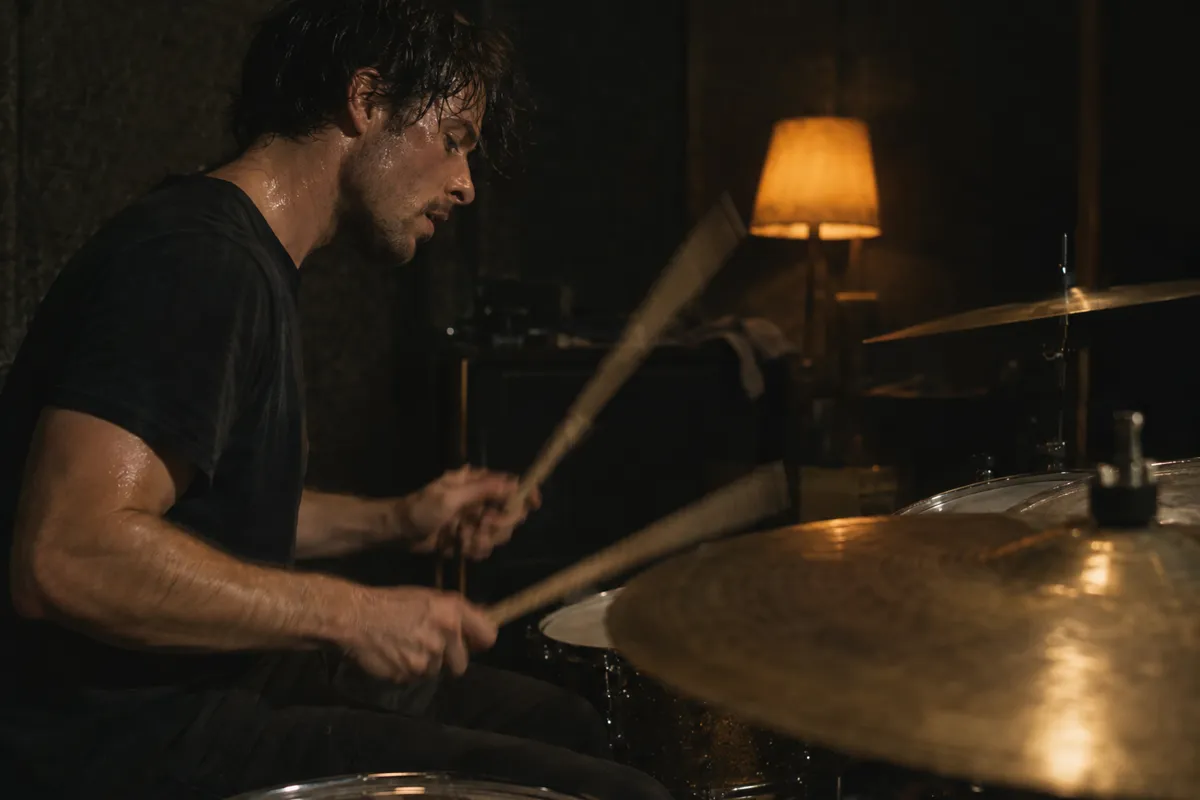
I am a drummer and my wrists hurt when I wear earplugs. Why?Asked: “I am a drummer and sometimes when I wear earplugs, my wrists hurt. What is happening here?”
Industrial plugs take away too much of the hi-hat and rimshot, so you hit harder and strain your wrists. Switch to plugs that protect but keep the music audible.
Many drummers use industrial strength earplugs, similar to those used in factories. These earplugs take off a lot of the sound of the high hat cymbal and rim shot of the drum. The drummer needs to hit harder in order to hear properly, with the result of wrist and arm damage. Using proper ear protection will resolve this. Drummers should be using enough ear protection to prevent hearing loss, and enough audibility of the music, so that they will not overplay.
What are the earpieces musicians wear on stage?Asked: “I have seen musicians on TV and at live shows wearing what look like hearing aids connected to small wires. What are these?”
Those are in-ear monitors (IEMs). They replace loud floor wedges with a controlled mix at a safe level, so the whole stage gets quieter.
These are called in-the-ear monitors, and they are a form of a modified hearing aid. Musicians use them as their own monitoring system instead of the small “wedge” monitors on the floor of the stage. The wires are connected to the sound amplification system either directly or through a wireless transmitter. The musician can then hear their own music as well as that of the other musicians, but at a safe level. When musicians use in-the-ear monitors, the overall sound level on stage is typically much less than if they were using conventional wedge monitors.
Ringing ears and recovery
2 QUESTIONSMy ears are still ringing after a concert. Will it stop?Asked: “I went to a concert last night and my ears are still ringing. Will it stop?”
Probably a temporary threshold shift from the concert. The ringing is tinnitus; the common subjective kind usually fades, but repeated exposure makes it more likely to stay.
The ringing is called tinnitus, Latin for ringing. Actually, tinnitus refers to any noise that is heard in the head, that does not come from the outside. Tinnitus comes in two flavors—objective and subjective. Objective tinnitus is tinnitus that can be heard by other people. This is very rare, and is usually related to blood vessel problems in the ear. Subjective tinnitus is much more common and refers to the type of tinnitus that only the person can hear. But, to answer your question: You are probably suffering from TTS from the concert.
My tinnitus went away after 16 hours. Is another concert safe?Asked: “If my tinnitus goes away after 16 hours, is it safe to go to another concert after?”
Yes and no. The ear recovers in about 16 hours, but TTS is a warning you had too much. Build in rest, and remember that once loss is permanent, it is permanent.
The short answer is “yes” and “no”. It is true that the ear recovers after about 16 hours and can take on new challenges of loud music, but TTS is a warning signal of being exposed to too much music. If you go to a concert or Friday night do not mow your lawn until Sunday. However, once you have a music related (or noise related) hearing loss, it is permanent, so do whatever it takes to prevent it. Certainly moderation is one idea. Enjoy that loud song, but when it is over, turn down the volume a bit to give your ears a rest.
Rock vs. classical, and the “joy factor”
3 QUESTIONSCan Mozart really hurt my hearing?Asked: “I understand that rock music can be damaging to my hearing, but I cannot believe that Mozart or Beethoven can be bad for me.”
Playing classical can be more damaging than rock: about 52% of classical musicians show loss versus 30% of rock musicians, because of hours per week and how closely players sit.
Believe it or not, but Classical music—or specifically playing classical music –can be more damaging than rock music. Research has shown that about 30% of rock musicians have hearing loss, and about 52% of classical musicians suffer from this problem. The main difference is that classical musicians rehearse, perform, and teach more hours each week than typical rock musicians. And classical musicians tend to be clustered closer together than rock musicians. So even though the peak sound levels in a rock band may be higher than in an orchestra, the total weekly dosage of a classical musician is greater.
Other differences between classical and rock musicians?Asked: “Are there any other differences between classical musicians and rock musicians?”
Research suggests music you enjoy is slightly less damaging than music you do not. Orchestral players often repeat pieces they did not choose, which may add to their risk.
Although this next issue is highly variable, many classical musicians do not like their music as much as rock musicians do. T is this liking of the music that is partially responsible for the difference in susceptibility between rock and classical musicians. Research has shown that if you like the music, it is actually less damaging than if you do not like it. Classical or orchestral musicians may play the same piece of music countless times, and become bored with it. In addition, an orchestra musician has their music selected for them by a conductor or artistic director. They may not like the selected pieces. In contrast, a rock musician tends to play their own music—music that they love. This research has been replicated many different ways, always with similar results. So, go ahead and enjoy your music (in moderation and with practicing the four techniques for hearing loss prevention learned throughout the Your Ears Rock program).
If I like my music, is it really less damaging?Asked: “Let me get this straight, if I like my music, it is less damaging to my hearing?”
Correct, within limits. Pleasure appears to lower stress hormones and change brain-to-ear feedback that affects vulnerability. Dangerous volumes still destroy hair cells, even for a favorite song.
That is correct. We are not sure exactly why that happens, however there are two theories. One is that when you are under stress, certain hormones are released in your inner ear that makes it more susceptible to hearing loss. A second theory is related to the fact that there are a series of feedback loops from the brain back to the inner ear. These feedback signals can change the susceptibility of the inner ear to damage. If the music is pleasurable, the feedback from the part of the brain corresponding to hearing, reduces the susceptibility.
Stage setups and room acoustics
6 QUESTIONSWhat are the clear shields in front of the drummer?Asked: “What are the clear plastic shields up on stage in front of the drummer used for and do they work?”
They are drum baffles. They cut the high-frequency energy of cymbals and rimshots reaching other players, but should not rise above the drummer’s ears or the drummer hears everything twice.
These are called baffles and are usually made of Plexiglas or Lucite. All baffles, due to the law of physics, attenuate (or lessen) the intensity of higher pitched sounds more than the lower bass notes. These baffles are designed to lessen the energy for those high-pitched high hat cymbals, and rim shot hits that a drummer may make. This protects the other musicians and helps improve the balance of the music. The low bass thumping sounds from the bass drum are not really affected. The only “trick” with baffles is that they should not extend up above the drummer’s ear because the last thing anyone would want is to cause more hearing loss for the drummer by being forced to hear the music, not only once but twice from the initial sound and the reflection off the back of the baffle.
What are the baffles on symphony seats?Asked: “I have seen baffles hooked onto the back of some seats at the symphony. What are these used for?”
They shield string players from brass and percussion behind them. They only help within about 7 inches of the player’s ear.
These are typically used on the seats of violinists and viola players. In many cases, these musicians need to sit in front of the brass or percussion sections, and they serve to lessen the energy from these louder instruments. The only problem with a seat baffle is that it has to be within 7 inches of the violinist’s ear. If it is further away, there is minimal benefit because of the reflections off the floor, ceiling, and music stands.
Why is the band set back from the edge of the stage?Asked: “When I go to a concert in a large venue, why is the band set back from the edge of the stage?”
The stage lip acts as an acoustic mirror that reflects high frequencies forward, so the band can play quieter and the audience still hears clearly.
There is an acoustic reason for this. The lip of the stage in front of the band or orchestra acts as an acoustic mirror. The higher pitched sounds of the band not only come off the stage to the audience but also reflect off the lip of the stage, thereby enhancing the higher pitched sounds. The band members do not have to play as loud up on stage in order for the people in the audience to hear it better because they are performing at a safer level.
Why do drummers hum or grunt while playing?Asked: “Is there a reason for drummers to hum or grunt during practice and performance?”
Humming contracts a small middle-ear muscle (the stapedius), which slightly reduces the sound energy reaching the inner ear. Drummers are protecting themselves.
Many percussionists hum and grunt. There is a small muscle in the middle ear that Mother Nature gave us so that our own voice would not be too loud to ourselves (called the stapedial muscle). It has been shown that if one hums or grunts just prior to a loud sound and continues that hum through the sound, this muscle in the ear continues to contract, providing an attenuation (or lessening) of the sound energy. So, these drummers and percussionists are actually protecting their hearing.
How do I make a small practice room quieter on a budget?Asked: “I practice in a small room. What changes can I make to reduce the sound levels with a small budget to do so?”
Heavy drapes and carpet absorb reflections cheaply. Wear high-fidelity protection (ER-15 or ER-25 type) while you play.
There are some inexpensive changes you can make. Wall coverings and floor coverings are the two easiest things you can do. If there is nothing on the walls, try putting up some heavy drapes. These will absorb many of the undesirable reflections. Also, carpeting will serve the same purpose for those reflections from the floor. A drop ceiling is starting to get a bit expensive however this will also help. You should also be wearing hearing protection such as the ER-15 or ER-25. These will let you hear your music and at a safer level.
I teach music and the room is awful. What can I do with no budget?Asked: “I teach music in school and the room is awful. Is there anything I can do to improve it with little to no budget?”
Put trumpets on risers, hang drapes behind you, and add 3-D relief art on side walls. Music teachers carry high weekly sound doses, so wear protection too.
There are several things you can do that are easy to accomplish and inexpensive. Incidentally, there is a fact sheet chapter 4.
- You can place the trumpet players on risers as this will allow the higher pitched harmonics of the trumpet to literally go over the heads of the other musicians “downwind”
- Put up drapes behind you in order to dampen the unwanted reflections.
- Get the art department to make some 3-D relief art that can be placed on the side walls. This will also help to lessen the unwanted reflections. Because music teachers are exposed to sound for significant amounts of time each week, wearing proper hearing protection should be strongly considered. Teachers are at risk of hearing loss and have successfully won cases with the Worker’s Compensation Board or other regulatory government agencies in the past.
Protection that fits musicians
Picked from our catalog to match the situations above. Every product page lists its Noise Reduction Rating.
Compare by situation