
Start here: how hearing works
Loud sound damages tiny sensors in the inner ear, and they do not grow back. These are the basics everyone should know before choosing protection.
From sound waves to something you recognize.
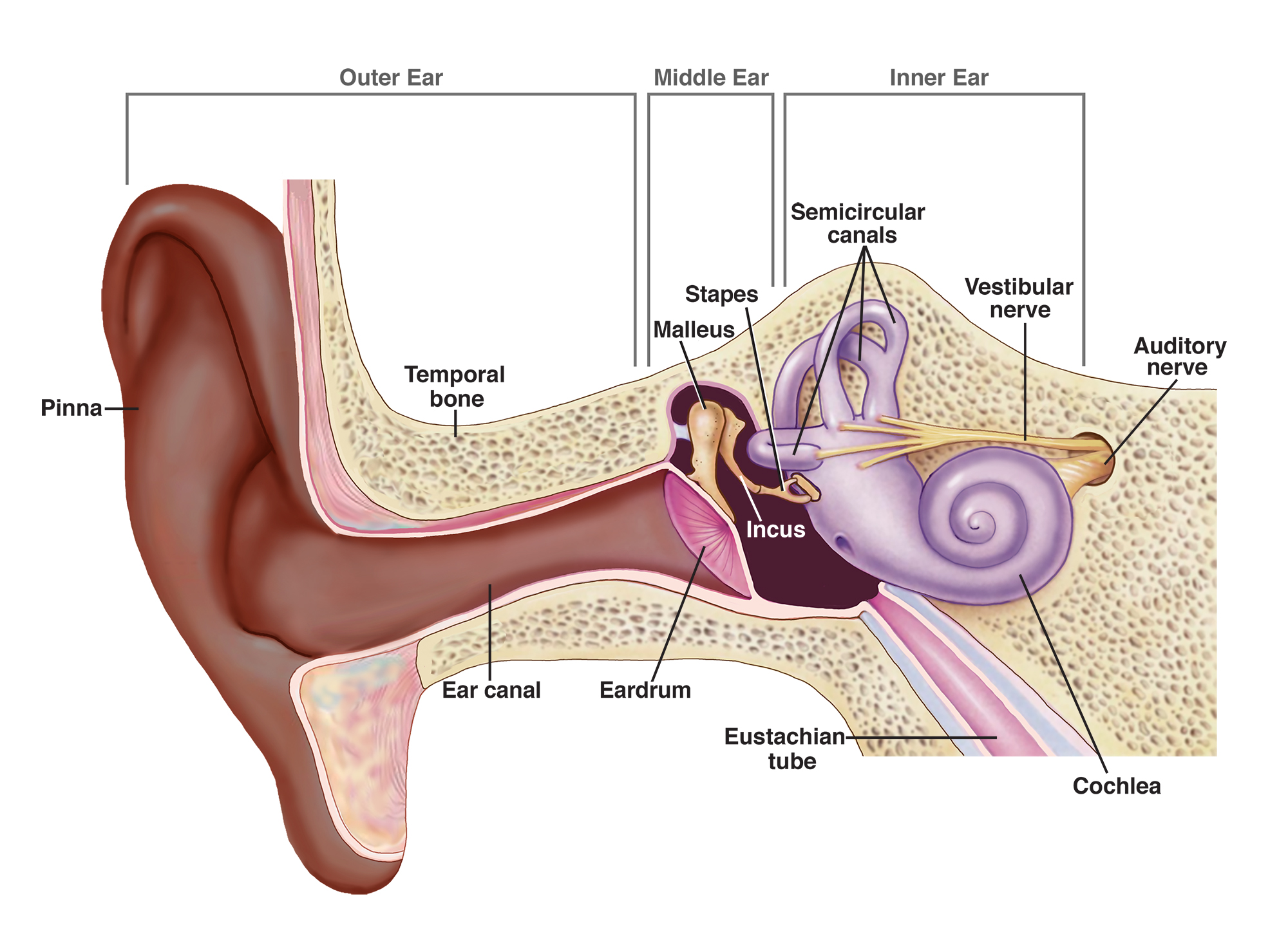
Sound travels through the ear canal to the eardrum, through three tiny middle-ear bones, and into the fluid-filled cochlea. Hair cells convert that movement into electrical signals that the auditory nerve carries to the brain. NIH/NIDCD: How Do We Hear?
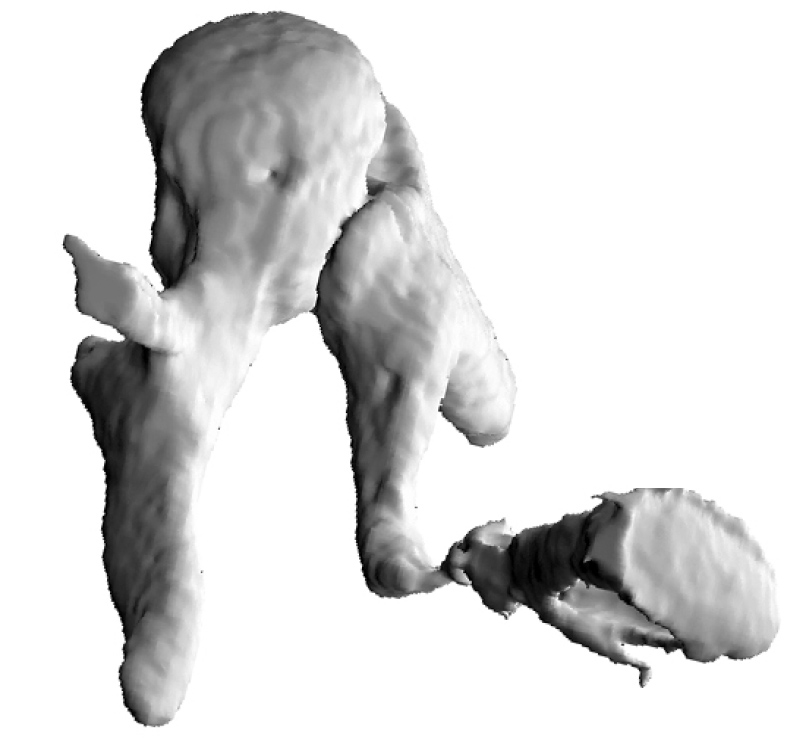
Three of the body’s smallest bones
The malleus (hammer), incus (anvil), and stapes (stirrup) pass sound vibrations from the eardrum toward the inner ear. These are the smallest bones in the body. NIH/NIDCD teaching guide
An NIH/NIDCD animation showing the path from the ear to the brain. Opens on the original video page.
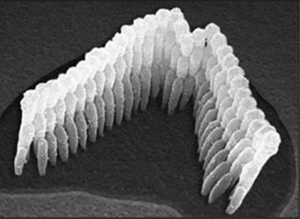
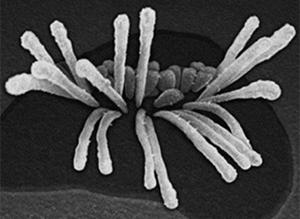
Healthy and damaged hair cell bundles
These microscopic bundles, called stereocilia, sit on top of sensory hair cells and move with sound vibrations. Loud noise can damage them, and human hair cell bundles cannot be repaired or replaced naturally. NIH/NIDCD
One decibel number is not the whole story.
A sound level is a measurement at a moment in time. A time-weighted average describes exposure over a period; both level and duration matter. CDC/NIOSH
Workplace noise: the NIOSH recommendation
NIOSH recommends an 85 dBA, 8-hour time-weighted average for occupational exposure, using a 3 dB exchange rate. Each 3 dBA increase roughly doubles sound energy and halves the time to the recommended daily dose. CDC/NIOSH
| Average sound level | Exposure duration |
|---|---|
| 85 dBA | 8 hours |
| 88 dBA | 4 hours |
| 91 dBA | 2 hours |
| 94 dBA | 1 hour |
| 97 dBA | 30 minutes |
| 100 dBA | 15 minutes |
This is an occupational recommendation, not a universal “safe time” or a guarantee against hearing loss; noise from work and other activities accumulates. CDC/NIOSH
Environmental noise: EPA guidance
The EPA’s 1974 environmental-noise guidance identified 70 dBA averaged over 24 hours, or 75 dBA averaged over 8 hours, to protect the general public from hearing loss. These are average-exposure guidelines, not a regulation or a maximum for every moment of the day. CDC/NIOSH explanation of the EPA guidance
Personal listening: WHO–ITU guidance
For personal audio devices, the WHO–ITU standard uses a weekly sound allowance of 80 dB for 40 hours for adults, or 75 dB for 40 hours for children. The children’s figure is a weekly allowance, not a separate “75 dB for 8 hours” WHO rule. WHO–ITU standard
What to do with these numbers
Lower the level, shorten the exposure, move away from the source, and wear properly fitted hearing protection when needed. Take precautions when sound reaches 85 dBA or more rather than treating a time limit as permission to stay unprotected. CDC/NIOSH
Your hearing.
Your connections.
Your brain.
Higher dementia risk associated with different degrees of hearing loss in one long-term study. Johns Hopkins Medicine
Why this connection deserves attention
A study following 639 adults for nearly 12 years found that mild hearing loss was associated with about twice the risk of dementia, moderate loss with three times the risk, and severe impairment with five times the risk. Johns Hopkins Medicine
These are relative-risk findings from an observational study, not a prediction of an individual’s future or proof that hearing loss causes dementia. The figures should not be read as a promise that hearing protection or hearing aids prevent dementia.
Hearing difficulties can make conversation and social connection harder. If you notice a change, a hearing evaluation is a practical next step rather than putting it off. Johns Hopkins Medicine
Learn about hearing aids & getting helpHearing aids: help for hearing, not a replacement for prevention.
Hearing aids can make sounds easier to hear and support communication. They do not restore normal hearing or regrow damaged hair cells. NIH/NIDCD: Hearing Aids
How they help
A microphone picks up sound, an amplifier processes and increases it, and a speaker delivers it to the ear. The right type depends on your hearing loss, daily listening needs, and comfort. NIH/NIDCD
Hearing aids can help many people with sensorineural hearing loss, but there are limits to what amplification can do. A hearing health professional can explain which options fit your situation. NIH/NIDCD
Where to start
If conversations are harder to follow, you frequently ask people to repeat themselves, or you keep turning up the TV, arrange a hearing evaluation. An audiologist or other hearing health professional can help you understand your hearing and care options. NIH/NIDCD: signs of hearing loss
Prescription and over-the-counter hearing aids serve different needs; OTC devices are intended for adults with perceived mild to moderate hearing loss, not every type or degree of hearing difficulty. NIH/NIDCD
Explore hearing aids and questions to askSource addresses: copy or select a URL
https://www.nidcd.nih.gov/health/how-do-we-hearhttps://www.nidcd.nih.gov/sites/default/files/documents/multimedia/nidcdteachertoolkit-script-508_7-31-2018.pdfhttps://commons.wikimedia.org/wiki/File:Middle_Ear_Ossicles.jpghttps://creativecommons.org/licenses/by-sa/3.0/https://www.nidcd.nih.gov/news/multimedia/journey-of-sound-videohttps://www.nidcd.nih.gov/health/how-does-noise-damage-your-hearinghttps://www.cdc.gov/niosh/bulletin/2016/noise.htmlhttps://www.who.int/publications/i/item/9789241515276https://www.hopkinsmedicine.org/health/wellness-and-prevention/the-hidden-risks-of-hearing-losshttps://www.nidcd.nih.gov/health/hearing-aidsSound, decibels and time
5 QUESTIONSWhat is a decibel?
A decibel measures sound level on a logarithmic scale: an increase of about 3 dB doubles sound intensity, not perceived loudness. Sound level and exposure time both matter. CDC/NIOSH
What actually causes hearing loss?Asked: “What are the factors affecting hearing loss?”
Risk depends on sound level and exposure time. NIOSH recommends 85 dBA as an 8-hour time-weighted average for work; each 3 dBA increase halves the time to the recommended daily dose. CDC/NIOSH
NIOSH’s occupational recommendation is 85 dBA averaged over an 8-hour workday, with a 3 dB exchange rate: 88 dBA for 4 hours or 91 dBA for 2 hours reaches the same recommended daily dose. These are workplace recommendations, not guaranteed safe listening times for everyone or all activities. CDC/NIOSH
General environmental-noise guidance and personal-audio listening allowances use different averaging periods. Compare NIOSH, EPA, and WHO guidance.
Do high or low frequencies matter more?Asked: “Is it only the decibel level that is important in terms of damage to the ears, or does the frequency of the sound matter as well? In other words, are high or low frequencies more dangerous than those in the middle range?”
Intensity and time are the critical factors. High frequencies tend to be lost first, but any frequency at a dangerous volume for too long causes permanent damage.
The decibel level and time of exposure are the most important considerations, referred to as our exchange rate. Some sounds — such as gunfire, explosions, etc. — are so loud (140 or more decibels), that ANY brief exposure to them at close range can cause permanent damage and hearing loss. Sounds at 100 decibels (such as loud music through stereo headphones) will take a while longer to cause permanent damage to hair cells in the cochlea. The frequency of the sound is less important than its decibel level and time of exposure.
Can sounds I cannot hear hurt me?Asked: “What about sounds outside our hearing range: Is there any damage – dog whistles, etc?”
Damage comes from loudness and duration, not pitch. A dog whistle is very high in frequency but does not move enough air to hurt the inner ear.
Both sound level and exposure time matter. NIOSH’s occupational recommendation is 85 dBA as an 8-hour time-weighted average, not a guaranteed safe period for every person or activity. Each 3 dBA increase halves the time to the recommended daily dose. CDC/NIOSH
A single intense impulse, such as an explosion or gunshot, can cause immediate damage; repeated exposure to loud sound can also damage hearing over time. NIH/NIDCD
What sounds cause noise-induced hearing loss?Asked: “What sounds cause noise-induced hearing loss (NIHL)?”
Examples include lawn mowers (about 80–100 dB), sporting events (94–110 dB), concerts or nightclubs (95–115 dB), and fireworks (140–160 dB). These ranges are approximate; actual exposure depends on conditions, distance, and duration. CDC sound examples
Examples include lawn mowers (about 80–100 dB), sporting events (94–110 dB), concerts or nightclubs (95–115 dB), and fireworks (140–160 dB). These ranges are approximate; actual exposure depends on conditions, distance, and duration. CDC sound examples
Loud sound can cause damage through a single intense impulse or repeated exposure over time. NIH/NIDCD
What damage looks and feels like
6 QUESTIONSWhat are the effects of noise-induced hearing loss?
Damage can be instant or build slowly over years. Temporary loss (a threshold shift) usually clears within 16 hours; hearing that does not return is permanent. Both kinds are preventable with earplugs or earmuffs.
- The effect from sound can be instantaneous and can result in an immediate hearing loss that may be permanent.
- The structures of the inner ear may be severely damaged. This kind of hearing loss may be accompanied by tinnitus (an experience of sound like ringing, buzzing or roaring in the ears or head) which may subside over time. Hearing loss and tinnitus may be experienced in one or both ears, and tinnitus may continue constantly or intermittently throughout a lifetime.
- The damage that occurs slowly over years of exposure to loud noise is accompanied by various changes in the structure of the hair cells. It also results in hearing loss and tinnitus.
- Exposure to impulse and continuous noise may cause only a temporary hearing loss. If the hearing recovers, the temporary hearing loss is called a temporary threshold shift. The temporary threshold shift largely disappears within 16 hours after exposure to loud noise.
- Hearing that does not recover is because permanent damage has occurred. This hearing loss is permanent.
- Both forms of NIHL can be prevented by the regular use of hearing protectors such as earplugs or earmuffs.
How long before damage shows up?Asked: “How long does it take for damage to hearing to manifest itself?”
Damage can show up immediately or creep in gradually. Because most hearing loss comes on slowly, people often do not notice it has happened.
Damage can be apparent immediately, or it can gradually become noticeable. Because the majority of hearing impairment comes on gradually, this makes it more difficult to notice that damage has taken place.
What is a temporary threshold shift (TTS)?Asked: “What is TTS? (Temporary threshold shift)”
TTS is temporary hearing loss. After a loud concert or game your hearing dips and your ears may ring, then recover over roughly 16 to 18 hours. It is a warning sign.
This is a fancy way of saying temporary hearing loss. After a loud concert or sporting event, your hearing is temporarily reduced. After about 16 to 18 hours, this resolves and your hearing should return to the level it was before (hopefully normal). Often the hearing is reduced, there is frequent tinnitus, which is especially noticed in quiet places such as when you are trying to sleep. The tinnitus and hearing loss (sometimes felt as a numbness in your ears) should completely resolve after 16 hours.
What are the symptoms?Asked: “What are the symptoms of NIHL?”
Symptoms build gradually: sounds become muffled or distorted and speech gets harder to follow. Many people are unaware until a hearing test finds it.
The symptoms of NIHL that occur over a period of continuous exposure increase gradually. Sounds may become distorted or muffled, and it may be difficult for the person to understand speech. The individual may not be aware of the loss, but it can be detected with a hearing test.
Who is affected?Asked: “Who is affected by NIHL?”
More than 30 million Americans are regularly exposed to hazardous sound, at work, at home and at play. Of the 28 million with some hearing loss, about a third were affected at least in part by noise.
More than 30 million Americans are exposed to hazardous sound levels on a regular basis. Individuals of all ages including children, adolescents, young adults and older people can develop NIHL. Exposure occurs in the workplace, in recreational settings and at home. There is an increasing awareness of the harmful noises in recreational activities, such as, concerts, sporting events, target shooting or hunting, snowmobiles, lawnmowers, go-carts, woodworking and other hobby equipment. Harmful noises at home may come from vacuum cleaners, garbage disposals, lawn mowers, leaf blowers and shop tools. People who live in either urban or rural settings may be exposed to noisy devices on a daily basis. Of the 28 million Americans who have some degree of hearing loss, about one-third have been affected, at least in part, by noise.
What happens when we get a music-related hearing loss?Asked: “What happens when we get a music related hearing loss?”
The inner ear holds about 15,500 hair cells. When some are damaged the loss is permanent, unlike outer and middle ear problems a doctor can usually treat.
Most people reach the age of 50 without any hearing problems, but others suffer a very slow and gradual hearing loss that may not be noticed for years. Certainly working in a noisy industry is one such cause. And listening to loud music is another. The ear is made up of three parts—the outer ear, the middle ear, and you guessed it, the inner ear. The inner ear is about the size of a small fingernail and contains about 15,500 nerve endings, called hair cells. When some of these hair cells are damaged, you have permanent hearing loss. Damage to the outer and middle ears is usually temporary and can be treated by a doctor.
Treatment, tinnitus and ear care
6 QUESTIONSWhat else causes permanent hearing loss?Asked: “What are some other causes of permanent hearing loss?”
Beyond age-related loss, the most common cause is noise at work and play. The ear does not distinguish loud noise from loud music. Sudden loss with dizziness is rare and needs a doctor.
Other than hearing loss associated with aging (Presbycusis), the most prevalent cause is working around noise and recreational activities. The ear does not know the difference between loud noise and loud music. To the ear, noise and music are just vibrations in the air. Rarely, a person may suffer a permanent hearing loss from a virus or even a brain tumor. These usually have a sudden onset and may be accompanied by dizziness. Hearing loss from noise or music tends to be gradual in nature with no dizziness.
Can hearing loss be treated with medicine or surgery?Asked: “Can my hearing loss be treated with medicine or surgery?”
Only outer-ear and middle-ear problems (wax, infections) can usually be treated. Inner-ear loss rarely can, though researchers are working on it.
Only hearing losses that are from the middle ear (where kids get ear infections) or from the outer ear (such as wax occlusion) can be treated. Rarely can a hearing loss be treated if it is from the inner ear. The inner ear is actually in the brain, so inner ear surgery is brain surgery. Having said this, researchers are working on a “vaccination” that can be given to reverse inner ear hearing loss.
What else happens as hearing gets worse?Asked: “What else can happen as my hearing gets worse?”
Two things often come with it: pitch perception problems and permanent tinnitus, a constant hum or whistle in your head. Prevention is the only sure fix.
Hearing loss comes with two other things that can be very annoying—or if you are a musician, career ending. They are pitch perception problems and permanent tinnitus. Pitch perception problems, as the name suggests, means that a person with a significant hearing loss may hear one note as another (and have limited understanding for speech). And can you imagine having a constant hum or whistle in your head day and night? This is what many people report with permanent tinnitus. So,…prevention of hearing loss is where it is at because YOUR EARS ROCK
What if my tinnitus will not go away?Asked: “What can be done if I do have tinnitus that will not go away?”
Persistent tinnitus almost always comes with hearing loss. A small hearing aid, retraining therapy and masking apps help most people. Stress makes it louder, so see an audiologist rather than worry.
Although this is uncommon, it does occur on occasion. There is almost always a hearing loss associated with tinnitus. Using a small hearing aid not only will help you hear better, it tends to mask or block out the tinnitus in the majority of people. Being overly concerned about it is another problem. The last thing someone should do is become stressed as this may make the tinnitus more noticeable. There are therapy programs that serve to retain the brain to ignore tinnitus and these can be very successful. Contact your local audiologist or doctor if this becomes a problem. Mobile-applications are also now available that allow you to customize tinnitus masking noise.
Where does ear wax come from?Asked: “Where does ear wax come from, and what does it have to do with hearing?”
Ear wax (cerumen) protects the ear canal and clears itself. It only causes trouble when it builds up. Do not clean inside the canal with a cotton swab; see a professional.
The scientific name is cerumen. Wax in the ears is a common and easily treatable cause of deafness, discomfort, and sometimes noises in your ears (tinnitus). The skin cells lining our outer ear canals include tiny glands, similar to sweat glands, which produce wax and acts as a protective layer, which traps dust and other particles which get into the ear. The wax slowly works its way to the outside, taking the trapped dirt and dust with it along with a scent that helps repel insects. Ear wax only causes problems when it builds up, which may be due to overproduction or difficulties in the natural clearance of the wax.
DO NOT clean your ears with a Q-Tip unless it is the outer portion of the ear (Pinna). Arrange to see a professional regarding having your ears washed out on a regular basis.
What research is being done?Asked: “What research is being done for NIHL?”
Researchers are studying how hair-cell bundles break down under noise and testing drugs that keep blood flowing in the cochlea, aiming at better prevention and treatment.
Scientists focusing their research on the mechanisms causing NIHL hope to understand more fully the internal workings of the ear, that will result in better prevention and treatment strategies. For example, scientists have discovered that damage to the structure of the hair bundle of the hair cell is related to temporary and permanent loss of hearing. They have found that when the hair bundle is exposed to prolonged periods of damaging sound, the basic structure of the hair bundle is destroyed and the important connections among hair cells are disrupted which directly lead to hearing loss.
Other studies are investigating potential drug therapies that may provide insight into the mechanisms of NIHL. For example, scientists studying altered blood flow in the cochlea are seeking the effect on the hair cells. They have shown reduced cochlear blood flow following exposure to noise. Further research has shown that a drug that promotes blood flow used for treatment of peripheral vascular disease (any abnormal condition in blood vessels outside the heart), maintains circulation in the cochlea during exposure to noise. These findings may lead to the development of treatment strategies to reduce NIHL.
Continuing efforts will provide opportunities that can aid research on noise-induced hearing loss as well as other diseases and disorders that cause hearing loss. Research is the way to develop new, more effective methods to prevent, diagnose, treat and eventually eliminate these diseases and disorders and improve the health and quality of life for all Americans.
Prevention
2 QUESTIONSHow can I protect my hearing?
Four easy ways: turn it down, wear hearing protection, put distance between you and the source, and limit your exposure time.
There are four easy ways to protect yourself from Noise-Induced Hearing Loss (NIHL)
- Turn it down
- Wear hearing protection
- Create a distance between you and the sound source
- Limit your exposure time
Can noise-induced hearing loss be prevented?Asked: “Can NIHL be prevented?”
Noise-induced hearing loss is preventable. Lower the level, limit time, move away from loud sources, and use properly fitted hearing protection when loud sound cannot be avoided. NIH/NIDCD
Noise-induced hearing loss is in most cases preventable. All individuals should understand the hazards of noise and how to practice good health in everyday life.
- Know which noises can cause damage (those above 85 decibels).
- Wear ear plugs or other hearing protective devices when involved in a loud activity (special earplugs and earmuffs are available at hardware stores and sporting good stores).
- Be alert to hazardous noise in the environment.
- Protect children who are too young to protect themselves.
- Make family, friends and colleagues aware of the hazards of noise.
- Have a medical examination by an otolaryngologist, a physician who specializes in diseases of the ears, nose, throat, head and neck, and a hearing test by an audiologist, a health professional trained to identify and measure hearing loss and to rehabilitate persons with hearing impairments.
Protection that fits start here
Picked from our catalog to match the situations above. Every product page lists its Noise Reduction Rating.
Compare by situation